Step 1
Start the Conversation
Tell us about your concerns, goals and what you're hoping to achieve.
Communication is how a person asks for what they need, makes a friend, follows a lesson and stays themselves after a stroke. When it is hard, everything downstream of it gets harder too. That is the part speech pathology works on.
You do not have to work out whether it is speech, language or something else before you call. Describing what you have noticed is enough to start with.

Most people arrive thinking about words. Speech pathology covers a good deal more than that, and the part that matters is usually not the part that gets noticed first.
It takes in the sounds a person can make, the words they understand, the sentences they can build, the way they read and spell, how they manage a conversation, and, at the other end of the lifespan, how safely they eat and drink. A child who will not speak at school and an adult relearning language after a stroke are both speech pathology, and the work looks nothing alike.
Our speech pathologists assess first and recommend second. Sometimes the answer is a block of therapy. Sometimes it is a few strategies for home and the classroom and a review in six months. Sometimes it is that development is within the usual range and nothing needs doing, which we will say plainly rather than sell you a program.
Everything here is evidence-informed and honest about what it can and cannot change. We will tell you what improvement usually looks like for a given difficulty, and we will not promise a timeframe we cannot stand behind.
Six areas, and a great deal of overlap between them. Most people we see have something from more than one.

When speech is hard to understand, or particular sounds are not coming in the way they usually would by a given age.
Often includes
Speech delay and unclear speech
Articulation, single sounds and sound patterns
Childhood apraxia of speech
Being understood by people outside the family
The words and sentences themselves: taking in what is said, and getting your own meaning back out.
Often includes
Late talking in toddlers
Language delay and developmental language disorder
Following instructions at home and in class
Vocabulary, grammar and telling a story
Communication alongside developmental delay or intellectual disability
Stuttering responds well to early, specific therapy, and the evidence on timing is clear enough that waiting to see is not a neutral choice.
Often includes
Stuttering in preschool and school-aged children
Stuttering that has continued into adulthood
Confidence in speaking situations
Strategies for school, work and the phone
Conversation, repair, reading the room. This is support to communicate effectively on your own terms, not training to appear neurotypical.
Often includes
Social communication and conversation skills
Selective mutism
Communication support for autistic people
Communication alongside ADHD
Literacy grows out of spoken language, so a speech pathologist is often the right person when reading is not coming together.
Often includes
Phonological awareness and decoding
Reading and spelling support
Written expression
Working with the school on classroom adjustments
The half of speech pathology most people never hear about: communication and swallowing in adulthood and older age.
Often includes
Communication after a stroke or brain injury
Voice, clarity and being understood at work
Swallowing difficulties and safer mealtimes
Communication support in aged care

Speech, play, motor skills and the routines that make kinder and childcare easier.

Communication, learning, sensory processing and the practical skills school asks for.

Counselling, emotional support, and the transitions that come thick and fast.

Life skills, confidence, and preparing for work, study or moving out.
Assessment, therapy, counselling and disability support, built around goals you set.

Home care, therapy and practical help, so staying put stays realistic.
Two things surprise people: how much of it happens before any therapy starts, and how much of it happens when we are not in the room.

We do not have a standard course of therapy to sell you. The first block of work is finding out what is actually happening, because two children with unclear speech can need entirely different things.
A conversation first. What you have noticed, what has already been tried, and what you want to be different.
Standardised assessment where it helps, and observation where a test would tell us less than watching.
A plain-language explanation of what is hard, why, and what the evidence says usually helps.
An honest recommendation, including "nothing yet, let us review in six months" when that is the truthful answer.

An hour a week is an hour a week. What changes communication is the other hundred and sixty-seven hours, which is why we spend so much of the session on the people around the person rather than only on the person.
You are in the room for children's sessions, unless there is a reason not to be. Watching the technique is how you get to use it.
Home practice that fits a real week, built around meals, the car and bedtime rather than a worksheet nobody gets to.
Strategies handed to teachers and carers, with your consent, so the approach does not stop at our door.
Regular review. If something is not working after a fair trial, we change it rather than book more of it.
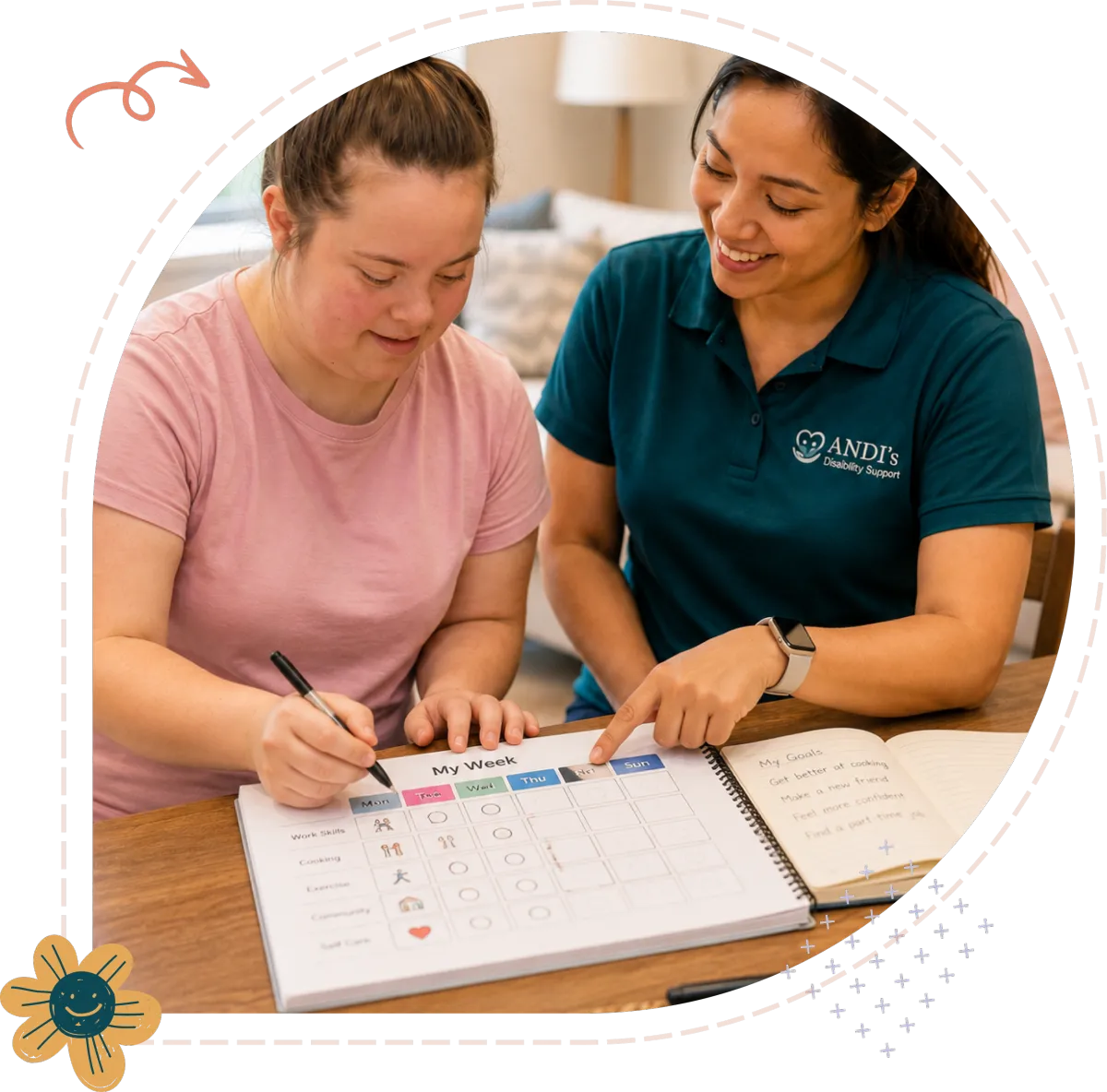
Tell us about your concerns, goals and what you're hoping to achieve.
We take the time to understand your situation and recommend the services that best support your individual.
Together, we develop a coordinated plan tailored to your strengths, goals and circumstances.
As your needs evolve, your support evolves too. Our team continues working alongside you to promote meaningful progress and long-term success.
Speech pathology reaches people through several different funding pathways, and which one applies depends on the person rather than on the service.
We do not publish a single price, because a single number would be wrong for most people reading this. What we will do is give you the fee for what you actually need, in writing, before you commit to anything. Older adults receiving support at home may be able to use a Home Care Package as well.
No referral, no eligibility decision to wait on, and usually the fastest way to start. The fee is quoted before the first appointment.
Speech pathology is a common inclusion in plans. We can work with self-managed, plan-managed and agency-managed participants.
Rebates are available for eligible services with a GP referral and care plan. A rebate covers part of the fee rather than all of it.
Depends on your level of cover and your remaining limit. Your fund can confirm the rebate before you book.
Our team is happy to talk it through before you book anything.
There is a wide normal range, so the more useful question is whether the gap is closing. As a rough guide, most children say single words around their first birthday and put two words together around two, and by three a stranger should understand most of what they say.
If your child is well behind that, if they have stopped doing something they used to do, or if you are simply worried, get it looked at. Early speech pathology is short and effective, and being told nothing needs doing is a good outcome, not a wasted appointment.
Not to book with us. You can contact us directly, and most people do. A referral matters for funding rather than access: Medicare rebates need a GP referral and care plan, and some programs ask for one. We will tell you which applies to your situation before you book.
It depends on what the difficulty is, and anyone who gives you a number before assessing is guessing. A single speech sound might take a short block. Developmental language disorder is longer-term work with reviews along the way.
What we will commit to is telling you after the assessment roughly what is involved, and reviewing properly at the end of each block rather than quietly booking the next one.
Usually, yes. School speech pathology is generally aimed at access to the curriculum, often in groups, and it is stretched across a lot of students. Individual therapy can go after specific goals at the pace your child needs.
The two work well together and badly in parallel, so with your consent we will talk to the school rather than run a second, separate program.
Yes. Adults are a real part of our caseload: communication after a stroke or brain injury, long-standing stuttering, voice, and communication alongside disability.
Swallowing is speech pathology too. If eating or drinking has become difficult, unsafe or frightening, that is worth assessing rather than adapting around, and it is often something we can improve.
Whether you're seeking support for yourself, your child or a loved one, we're here to listen, understand and help you move forward with confidence.
From assessment and therapy to counselling, disability support and home care, our team is committed to providing personalised care that empowers individuals and strengthens families.

We care deeply about the people we support, and it shows in how we work.

Qualified clinicians who supervise each other and keep learning.

Support that stays with you as your needs change, not just at the start.



We honour the diverse communities such as the LGBTQ of which we are a part and we celebrate the extraordinary diversity of people that each represent.

We acknowledge the traditional owners of the lands. We pay respect to Elders, past and present and acknowledge the ongoing connection that Aboriginal people have to this land and recognise Aboriginal people as the original custodians of this land.

Aboriginal peoples of the Kulin Nations are the Traditional Custodians of the lands now named City of Greater Dandenong. Those who live, work and contribute to the municipality walk in the footsteps of the Bunurong/Boon Wurrung and Wurundjeri Woi-wurrung Peoples, and are enriched by Australia’s First Peoples experiences, cultures, histories and knowledge.
© 2026 ANDI Support. All rights reserved.