Step 1
Start the Conversation
Tell us about your concerns, goals and what you're hoping to achieve.
If the NDIS is how your support is funded, this page covers what we deliver, which part of a plan usually pays for it, and what to do next. If it is not, nothing here stops you working with us.

ANDI is a multidisciplinary allied health organisation. The NDIS is one of five ways the people we work with pay for that support, alongside private payment, Medicare rebates, private health extras and Home Care Packages.
We say that plainly because it matters in both directions. If you are an NDIS participant, you are not getting a lesser version of a service designed for someone else, and the clinician you see is the same one a private client sees. If you are not a participant, you do not need to become one to work with us.
It also means we will not tell you every service on this site is NDIS funded, because it is not. What your plan covers depends on your goals, your budgets and what the agency agreed to fund. We will go through your plan with you and be straight about which parts of what you are asking for it will actually pay for.
The NDIS is also not a substitute for the rest of your life. Where school, a GP, a specialist or a family member is doing something that works, our job is to fit around it rather than duplicate it.
Six areas, and which of them your plan funds depends on your goals and your budgets. We will check that with you before anything starts.

Support for young children and their families, delivered in the places a child actually spends their day rather than only in a clinic room.

Speech pathology, occupational therapy and counselling, provided as therapeutic supports where a plan funds them.

Hands-on support with daily living, personal care, community access and the practical parts of an ordinary week.
Work aimed at skills that outlast the funding: communication, independence, routines, confidence and managing your own supports.
Assessment where it informs planning or a review, written so a planner can act on it. Read the note below on what the agency generally will and will not fund.
Reports, reviews and progress notes for support coordinators, plan managers and other providers, so your team is working from the same information.
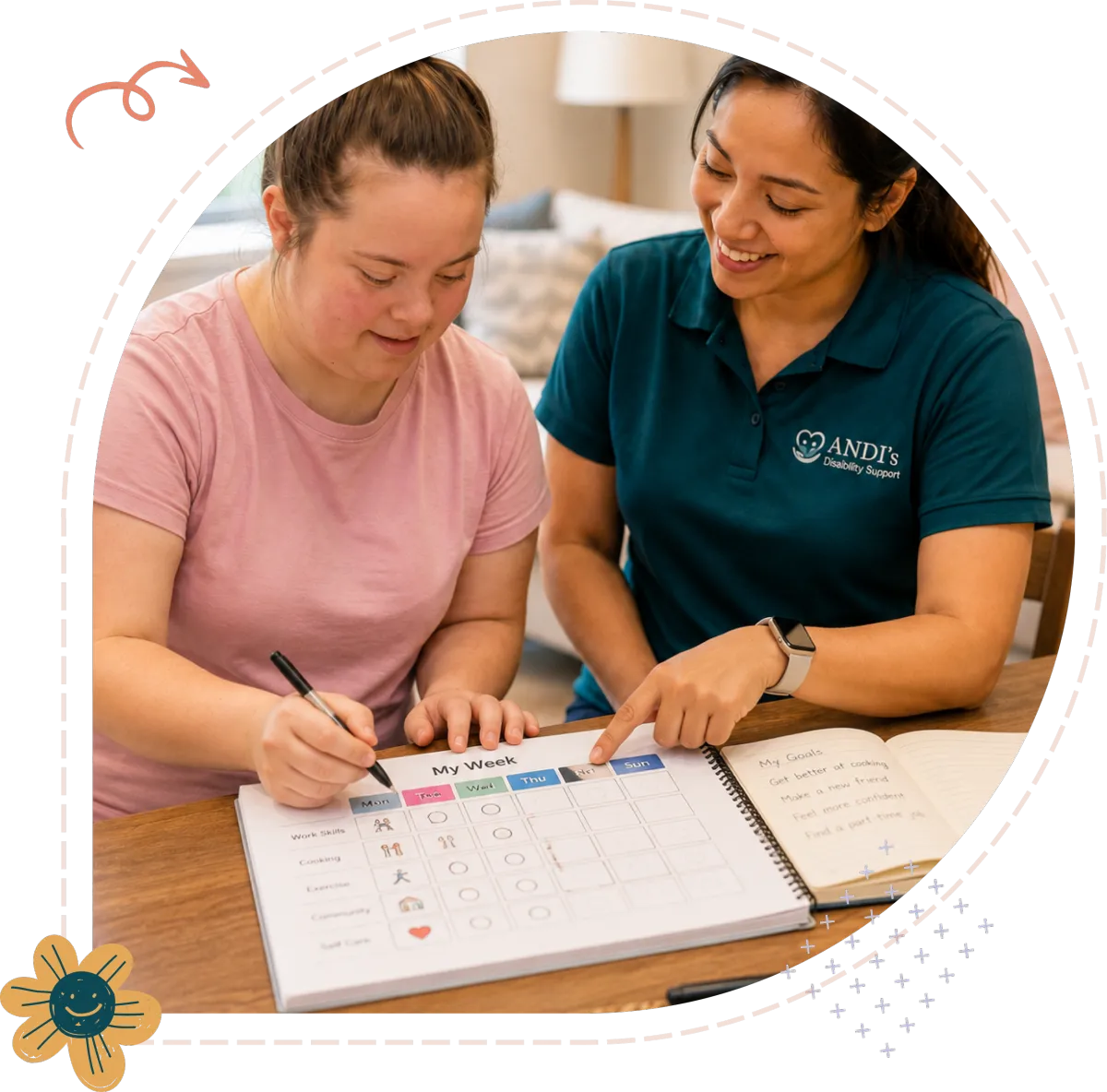
Tell us about your concerns, goals and what you're hoping to achieve.
We take the time to understand your situation and recommend the services that best support your individual.
Together, we develop a coordinated plan tailored to your strengths, goals and circumstances.
As your needs evolve, your support evolves too. Our team continues working alongside you to promote meaningful progress and long-term success.
Plenty of providers are vague about the edges of the scheme. Being clear about them up front saves people money and disappointment, so here they are.
None of this is a reason not to contact us. It is the difference between what we can control, which is the quality and honesty of the work, and what we cannot, which is what the agency decides.
If we think a support you are asking for is unlikely to be funded, or unlikely to help, we will say so before you spend plan money on it.
Not everything we offer is NDIS funded. Several of our services are paid for privately, through Medicare or through aged care, and we will tell you which applies to you.
We cannot guarantee a plan outcome. Access and funding decisions are made by the agency. We can give you accurate, well-evidenced reports; we cannot promise what the agency will do with them.
Assessment purely to obtain a diagnosis for access is generally not funded by a plan. Where that is what you need, we will quote it privately rather than claim it.
Your budget is finite. Hours, travel, reports and cancellations all come out of the same funding, and we will keep you told where you are up to rather than letting it run out quietly.
NDIS access is for people who apply before turning 65. If you are older than that and not already a participant, the pathway is usually My Aged Care, and we deliver home care through that instead.
Most of the people we work with are not NDIS participants. These are the other ways support gets paid for, and none of them require a disability determination. Which applies depends on the service, your age and your circumstances. We will tell you what you would be out of pocket before you commit to anything.
No eligibility decision and no waiting on a plan. The fee is quoted in writing before the first appointment.

Rebates for eligible services with a GP referral and care plan. A rebate covers part of the fee rather than all of it.

Depends on your level of cover and your remaining extras limit. Your fund can confirm before you book.
The usual pathway from 65, and from 50 for Aboriginal and Torres Strait Islander people. Starts with an assessment through My Aged Care.
Our team is happy to talk it through before you book anything.
No. Most of the people we see are not NDIS participants. Support can be paid for privately, through Medicare rebates where a service is eligible, through private health extras, or through a Home Care Package. The NDIS is one pathway among those.
Self-managed and plan-managed participants can choose any provider, registered or not, so those plans are straightforward. Agency-managed plans can only be used with NDIS registered providers, so ring us or send an enquiry and we will tell you immediately whether we can invoice the agency for what you need.
Therapy is usually funded from a capacity building budget, and hands-on daily support from core funding, but plans differ and the wording in yours is what counts. Send it to us, or ask your plan manager or support coordinator, and we will work out together what it covers before anything is booked.
We can provide assessments, reports and progress evidence written in the form the agency expects, with functional impact described rather than implied. What we cannot do is guarantee the decision, because that is the agency's to make. Note too that a plan generally will not fund an assessment done purely to obtain a diagnosis for access, so that is usually quoted privately.
We would rather warn you than surprise you, so we track what has been used against what was agreed and tell you when the budget is getting short. From there you can reduce the frequency, pause, continue privately, or work with your coordinator on a plan review. Nothing is invoiced that you have not agreed to.
Whether you're seeking support for yourself, your child or a loved one, we're here to listen, understand and help you move forward with confidence.
From assessment and therapy to counselling, disability support and home care, our team is committed to providing personalised care that empowers individuals and strengthens families.
We care deeply about the people we support, and it shows in how we work.

Qualified clinicians who supervise each other and keep learning.

Support that stays with you as your needs change, not just at the start.



We honour the diverse communities such as the LGBTQ of which we are a part and we celebrate the extraordinary diversity of people that each represent.

We acknowledge the traditional owners of the lands. We pay respect to Elders, past and present and acknowledge the ongoing connection that Aboriginal people have to this land and recognise Aboriginal people as the original custodians of this land.

Aboriginal peoples of the Kulin Nations are the Traditional Custodians of the lands now named City of Greater Dandenong. Those who live, work and contribute to the municipality walk in the footsteps of the Bunurong/Boon Wurrung and Wurundjeri Woi-wurrung Peoples, and are enriched by Australia’s First Peoples experiences, cultures, histories and knowledge.
© 2026 ANDI Support. All rights reserved.