Step 1
Start the Conversation
Tell us about your concerns, goals and what you're hoping to achieve.
Most people who come to counselling are not in crisis and have never been given a label for what is going on. They have something that has stopped being manageable on their own, and they would like a hand with it.
If you are not sure counselling is what you need, say that when you call. Working it out with you is part of the job, and there is no cost to asking.

There is a widespread idea that counselling is for people who are unwell, and that everyone else should be able to manage. It is a bad idea, and it keeps people waiting far longer than they need to.
Counselling is a structured conversation with someone trained to have it. It is useful for a diagnosed anxiety disorder and equally useful for a good week that keeps turning into a bad one, a child who has stopped wanting to go to school, a marriage that has become an argument about logistics, or a loss that has not settled.
What happens in the room depends on the person. With young children it often looks like play and drawing, with teenagers like a conversation on their terms, and with adults like talking, noticing patterns and trying something different between sessions. The approach is evidence-informed and chosen to fit the person, not applied from a manual.
We will not tell you how many sessions it takes to feel better, because nobody honestly can. We will tell you what we are working on, why, and whether it seems to be helping.
Six areas people come to us about. Most people arrive with more than one of them, and rarely in the tidy order they are listed here.

The most common reason people come, and the one most often left the longest because it looks like coping from the outside.
Often includes
Anxiety, worry and overthinking
Stress, overload and burnout
Panic, avoidance and the world getting smaller
Building resilience and coping strategies
When things have flattened out, or when the running commentary about yourself has become relentless.
Often includes
Low mood and depression
Self-esteem and self-criticism
Motivation, withdrawal and loss of interest
Loneliness and disconnection
Big feelings arriving faster than anyone can manage them, and the wreckage afterwards. Common in children, and not only in children.
Often includes
Anger management and short fuses
Emotional regulation and big feelings
Meltdowns, shutdowns and what follows them
Recovering and repairing after a hard moment
When school has become the thing to be survived rather than attended, and the mornings have turned into a battle.
Often includes
School anxiety and reluctance
School refusal and non-attendance
Bullying and its aftermath
Social difficulties and making friends
For the things that are not disorders. Loss, upheaval and adjustment are painful without being pathological, and support still helps.
Often includes
Grief and bereavement
Separation, family change and blended families
Adjusting to a diagnosis, illness or injury
Trauma-informed support, at a pace you set
Sometimes the most useful person to work with is not the person everyone is worried about.
Often includes
Parent coaching and practical strategies
Family support and communication at home
Supporting an autistic or ADHD child or partner
Carer stress and looking after yourself as well

Speech, play, motor skills and the routines that make kinder and childcare easier.

Communication, learning, sensory processing and the practical skills school asks for.

Counselling, emotional support, and the transitions that come thick and fast.

Life skills, confidence, and preparing for work, study or moving out.

Assessment, therapy, counselling and disability support, built around goals you set.

Home care, therapy and practical help, so staying put stays realistic.
Two things worth knowing before you book: what happens in the first session, and what we do and do not keep private.

Nothing is expected of you beyond turning up. You will not be asked to relive anything, and you can say that a subject is off limits for now and have that respected.
Mostly listening. What has been going on, how long it has been going on, and what you have already tried.
What you want to be different. Vague is fine. "I want to stop dreading Sunday nights" is a perfectly good starting goal.
A plan you agree to, including how often we would meet and roughly what the work would involve.
Permission to change your mind. If the fit is not right, say so. We would far rather refer you on than keep an appointment slot filled.

What you say stays in the room. There are limits to that, they are set by law and by professional obligation, and we would rather you heard them here than discovered them later.
We may have to act if someone is at serious risk of harm, or if a court requires records. Wherever possible we would tell you first.
Young people get real privacy. We agree at the start what is shared with parents and what is not, and we keep to it.
Parents are not left in the dark. You will know what we are working on and how it is going, without being given a transcript.
Nothing goes to a school, GP or funder without your written consent, beyond those legal limits.
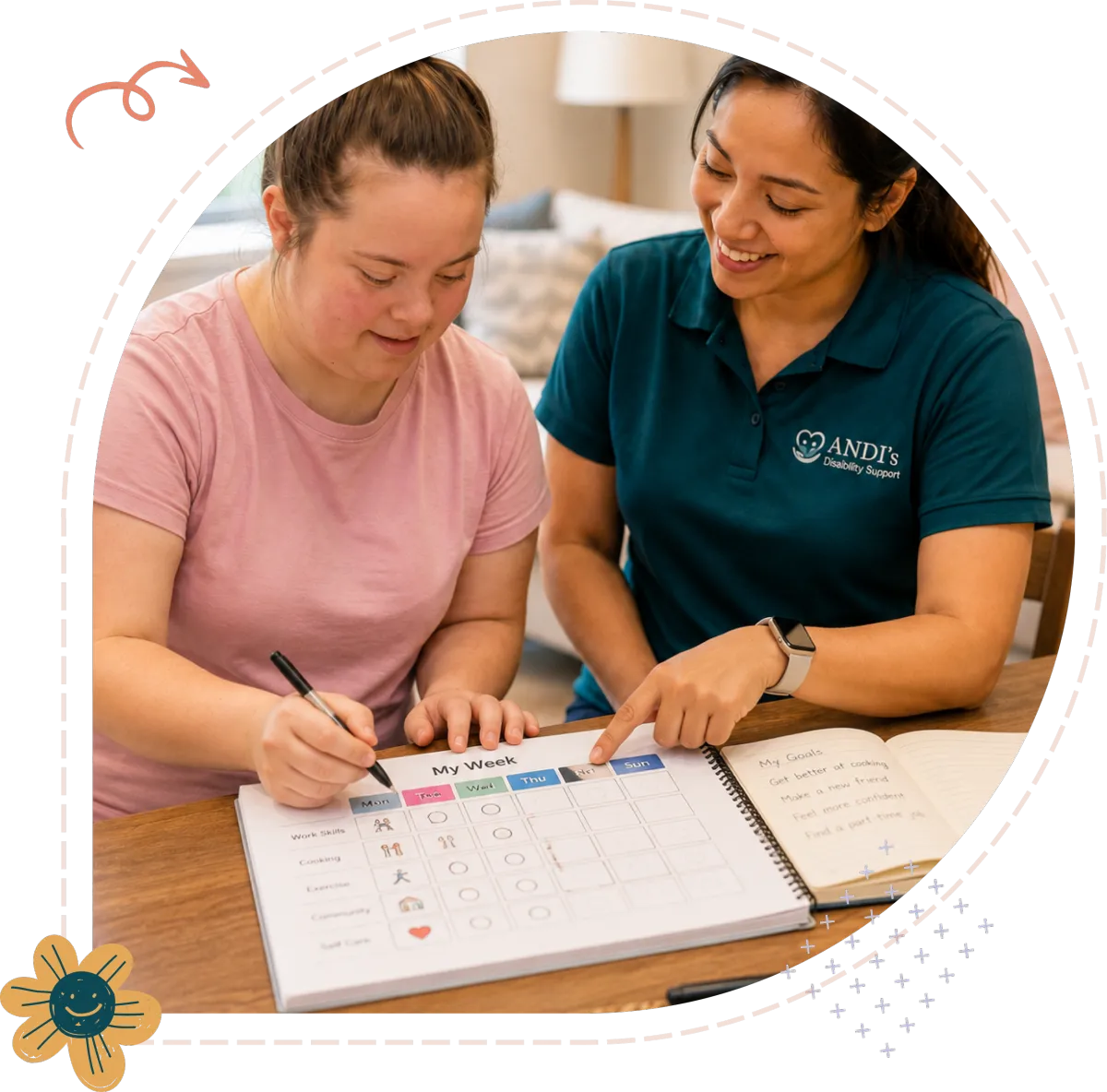
Tell us about your concerns, goals and what you're hoping to achieve.
We take the time to understand your situation and recommend the services that best support your individual.
Together, we develop a coordinated plan tailored to your strengths, goals and circumstances.
As your needs evolve, your support evolves too. Our team continues working alongside you to promote meaningful progress and long-term success.
Cost stops more people from starting counselling than anything else, so it is worth being clear about the pathways before you book rather than after.
Which one applies depends on your circumstances and on which clinician you see, since rebates are tied to particular registrations. We will tell you what you would actually be out of pocket per session, in writing, before you commit to anything.
No referral, no plan and no eligibility decision to wait on. Usually the fastest way to be seen, with the fee quoted before the first session.
Counselling is funded in some plans and not in others, and it is usually tied to a stated goal. We will check what your plan actually allows.
Rebates are available for eligible services with a GP mental health treatment plan. Eligibility depends on the clinician you see, and we will confirm it before you book.
Depends on your level of cover, the clinician's registration and your remaining limit. Your fund can confirm the rebate before you book.
Our team is happy to talk it through before you book anything.
Neither. You can contact us directly, describe what is going on in your own words, and book. Most of the people we see have no diagnosis and are not seeking one.
A referral only matters for funding. A Medicare rebate needs a GP mental health treatment plan, and eligibility also depends on the clinician you see. We will tell you which applies to you before you book anything.
Mostly listening. What has been going on, how long for, what you have already tried, and what you would like to be different. You will not be asked to go into anything you are not ready for, and you can say a subject is off limits and have that respected.
It ends with a plan you agreed to, including how often we would meet. If the fit is not right, say so. We would rather refer you on than keep the slot filled.
What you say stays in the room. The limits are that we may have to act if someone is at serious risk of harm, or if a court requires records, and wherever possible we would tell you before doing so.
For young people we set the ground rules in the first session, with the young person and the parent both present. Parents will know what we are working on and how it is going. They will not be given a transcript, because a teenager who feels reported on stops talking.
Nobody can honestly tell you that in advance, and be wary of anyone who does. Some things shift in four to six sessions. Longer-standing patterns take longer.
What we commit to is reviewing it with you regularly, saying plainly if it does not seem to be helping, and finishing when the work is done rather than letting an appointment quietly repeat itself.
That happens, and it is better found early. Sometimes distress is sitting on top of something else: an undiagnosed difference, a communication difficulty, sensory overload, or a school that is not adjusting. Counselling around that for a year helps nobody.
Because assessment, speech pathology and occupational therapy are in the same organisation, we can raise it and change direction. If what you need is not something we offer, we will tell you that and point you at who does.
Whether you're seeking support for yourself, your child or a loved one, we're here to listen, understand and help you move forward with confidence.
From assessment and therapy to counselling, disability support and home care, our team is committed to providing personalised care that empowers individuals and strengthens families.

We care deeply about the people we support, and it shows in how we work.

Qualified clinicians who supervise each other and keep learning.

Support that stays with you as your needs change, not just at the start.



We honour the diverse communities such as the LGBTQ of which we are a part and we celebrate the extraordinary diversity of people that each represent.

We acknowledge the traditional owners of the lands. We pay respect to Elders, past and present and acknowledge the ongoing connection that Aboriginal people have to this land and recognise Aboriginal people as the original custodians of this land.

Aboriginal peoples of the Kulin Nations are the Traditional Custodians of the lands now named City of Greater Dandenong. Those who live, work and contribute to the municipality walk in the footsteps of the Bunurong/Boon Wurrung and Wurundjeri Woi-wurrung Peoples, and are enriched by Australia’s First Peoples experiences, cultures, histories and knowledge.
© 2026 ANDI Support. All rights reserved.