Step 1
Start the Conversation
Tell us about your concerns, goals and what you're hoping to achieve.
ADHD is not a question of effort or discipline, and it is not diagnosed from one appointment. A proper assessment looks at attention, activity, impulsivity and executive functioning across settings, over time, and against everything else that could explain the same picture.
Being able to focus on something you love does not rule ADHD out. That pattern is one of the most common reasons people are told they cannot have it.

Three things: that the pattern has been there a long time, that it shows up in more than one part of life, and that it is not better explained by something else. All three have to hold.
That last one does most of the work. Poor sleep, anxiety, hearing loss, a language or learning difficulty, trauma and simply being in the wrong classroom can all produce inattention that looks identical from the outside. An assessment that does not seriously consider those is not an assessment.
ADHD also frequently travels with other things, particularly anxiety, learning difficulties and autism. Finding one does not mean stopping the search, and a report that names only ADHD when there is more going on is not much use.
The point of it is not the label. It is knowing which strategies, adjustments and treatments are worth trying, and being able to stop attributing to character something that was never about character.
What families, teachers, partners and adults themselves describe when they first ring. Everyone does some of this sometimes. The question is how much, how long, and at what cost.

Less an absence of attention than an inability to direct it on demand. Often alongside intense focus on the right thing at the right moment.
Commonly described
Losing the thread mid-task, mid-page or mid-sentence
Starting things far more easily than finishing them
Being told to apply themselves, for years
Deep focus on something absorbing, then nothing left over
Restlessness that does not have to look like running about. In adults it is often entirely internal.
Commonly described
Fidgeting, moving, or an inability to sit through things
Interrupting, or answering before the question lands
Decisions made fast and regretted shortly after
A constant sense of being driven by an engine
The management layer: planning, starting, sequencing, keeping track. Often the part that causes the most damage day to day.
Commonly described
Knowing exactly what to do and being unable to begin
Time passing differently to how everyone else seems to experience it
Lost keys, missed deadlines, unopened mail
Working twice as hard for the same result
Not in the formal criteria, but described by almost everyone who lives with ADHD, and often the thing that hurts most.
Commonly described
Feelings arriving at full volume, and passing quickly
Frustration and overwhelm out of proportion to the trigger
Rejection and criticism landing very hard
Exhaustion from holding it together all day
The setting where the gap between capability and output becomes visible to other people.
Commonly described
Bright, capable, and not performing on paper
Careless errors in work that is well understood
Trouble with instructions given all at once
A reputation for potential rather than results
Many adults were never assessed, particularly those who were quiet rather than disruptive. Girls and women are still missed disproportionately.
Commonly described
Coping through school, then unravelling at university or work
Long-running anxiety, low mood or burnout on top
Systems and reminders holding a life together
Recognising it after a child is diagnosed

Speech, play, motor skills and the routines that make kinder and childcare easier.

Communication, learning, sensory processing and the practical skills school asks for.

Counselling, emotional support, and the transitions that come thick and fast.

Life skills, confidence, and preparing for work, study or moving out.

Assessment, therapy, counselling and disability support, built around goals you set.
Home care, therapy and practical help, so staying put stays realistic.
The criteria themselves rule out a one-appointment diagnosis: the pattern has to be shown in more than one setting, which means more than one source of information.

Enough to see the pattern across time and place, and enough to test the alternative explanations properly rather than nodding at them.
Developmental and school history, since the criteria require the pattern to have been present well before adulthood.
Standardised rating scales completed by more than one person who sees the person regularly, in different settings.
Direct assessment, including cognitive and attention measures where they add something, rather than as a formality.
A careful look at the alternatives: sleep, hearing, anxiety, mood, trauma, and language or learning difficulties.

People often assume an ADHD assessment leads directly to a prescription. It does not, and we would rather you knew that before booking than after.
We do not prescribe. ADHD medication in Australia is started by a paediatrician or psychiatrist, not by a psychologist.
Our report supports that conversation, which is often what a prescriber asks for before considering treatment.
We can point you to the next step, and tell you honestly what the wait to see a prescriber tends to look like.
Medication is one option among several, and adjustments, skills support and counselling all have evidence behind them too.
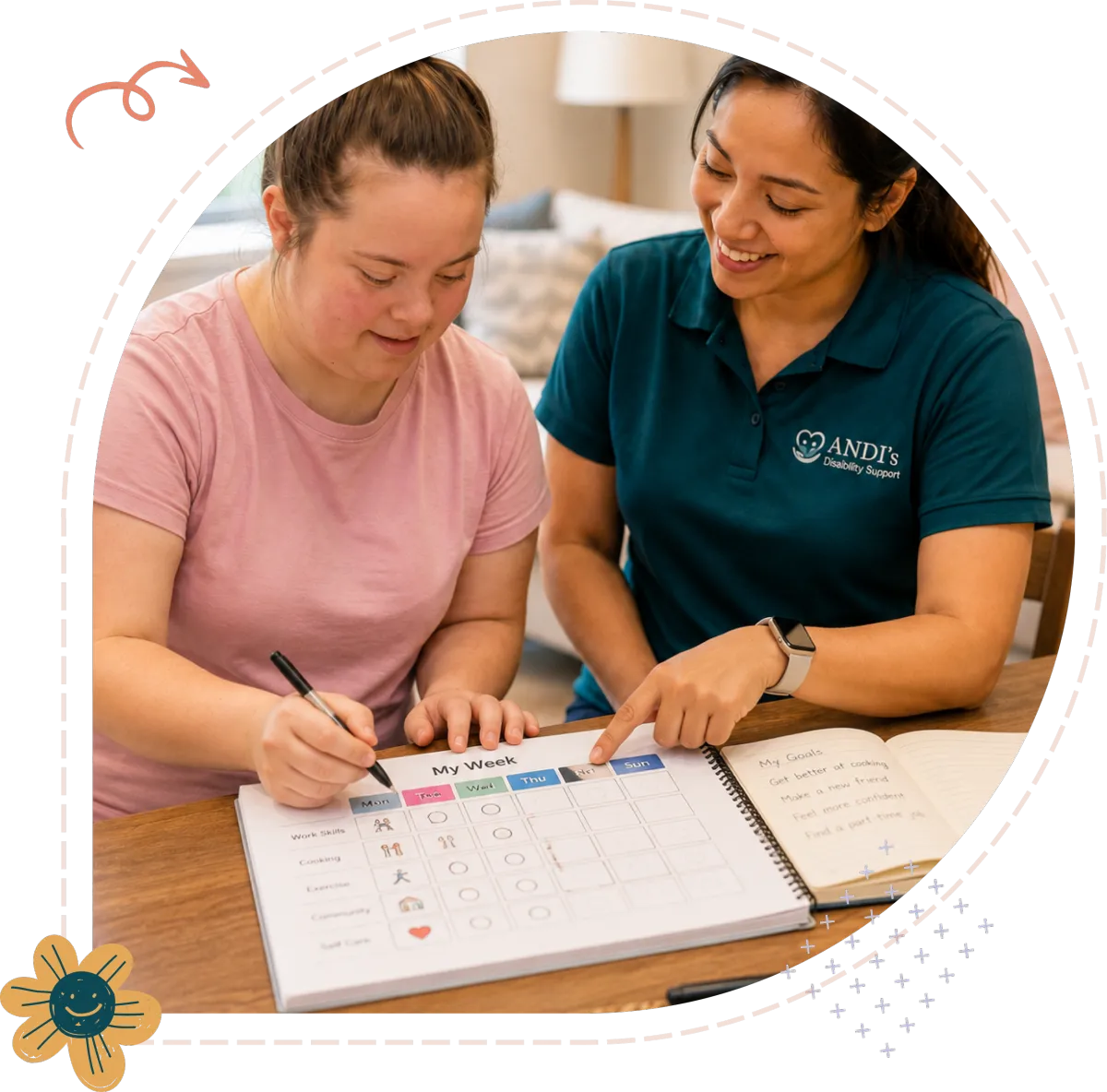
Tell us about your concerns, goals and what you're hoping to achieve.
We take the time to understand your situation and recommend the services that best support your individual.
Together, we develop a coordinated plan tailored to your strengths, goals and circumstances.
As your needs evolve, your support evolves too. Our team continues working alongside you to promote meaningful progress and long-term success.
The public wait for an ADHD assessment is long enough that most people end up looking at private options, so the cost deserves a straight answer rather than a hidden one.
We do not publish a single figure, because it varies with age and complexity and a wrong number helps nobody. We quote the whole cost in writing before you commit, report included, rather than quoting a session rate and adding to it as you go.
No referral and no eligibility decision to wait on, and usually the shortest wait. The full cost is quoted before the first appointment.
ADHD on its own is not usually a basis for NDIS access, and assessment is generally not funded to obtain a diagnosis. We will check your situation with you.
Rebates are available for some assessment appointments with a GP or paediatrician referral and a care plan. A rebate covers part of the cost, not all of it.
Depends on your level of cover and your remaining limit, and often applies to only part of the assessment. Your fund can confirm before you book.
ADHD very often travels with something else, and sometimes the thing underneath is different altogether. If one of these sounds closer, tell us and we will steer you.
Communication, social interaction, sensory experience and developmental history, gathered across settings.
A standardised measure of cognitive ability across four areas of reasoning, memory and speed.

A broader profile of attention, memory, processing speed, language and problem solving.
Our team is happy to talk it through before you book anything.
Not directly, and this is the most common misunderstanding we hear. We assess and diagnose; we do not prescribe. In Australia ADHD medication is started by a paediatrician or a psychiatrist.
What our report does is give a prescriber the detailed evidence they generally ask for before considering treatment. We will tell you what the next step looks like, and be honest about the wait.
No, and being told it does is one of the most common reasons people are turned away and then diagnosed years later. ADHD affects the ability to direct attention on demand, not the capacity to pay attention at all.
Intense focus on something immediately engaging, alongside great difficulty starting something dull but necessary, is a very familiar pattern rather than a contradiction.
Yes. Adults are a large part of this caseload, particularly people who were quiet rather than disruptive, and particularly women.
The criteria do require that the pattern was present in childhood, so we work to establish that from school reports, family accounts and your own history. It is reconstruction rather than observation, and it is a recognised part of adult assessment.
That happens often enough to be worth expecting, and it is a useful result rather than a wasted one. Sleep problems, anxiety, a language or learning difficulty, hearing loss, trauma and autism can all produce a similar picture.
You still get a detailed profile explaining what is hard and why, plus recommendations. If the process points at something else, we will say so and tell you what would follow.
For children and teenagers, information from school is close to essential, because the criteria require the pattern to show in more than one setting. That is usually rating scales completed by a teacher rather than a visit.
For adults we ask for whatever second perspective is available and comfortable, which might be a partner, a parent or old school reports. Nothing goes to an employer without your written consent.
Whether you're seeking support for yourself, your child or a loved one, we're here to listen, understand and help you move forward with confidence.
From assessment and therapy to counselling, disability support and home care, our team is committed to providing personalised care that empowers individuals and strengthens families.
We care deeply about the people we support, and it shows in how we work.

Qualified clinicians who supervise each other and keep learning.

Support that stays with you as your needs change, not just at the start.



We honour the diverse communities such as the LGBTQ of which we are a part and we celebrate the extraordinary diversity of people that each represent.

We acknowledge the traditional owners of the lands. We pay respect to Elders, past and present and acknowledge the ongoing connection that Aboriginal people have to this land and recognise Aboriginal people as the original custodians of this land.

Aboriginal peoples of the Kulin Nations are the Traditional Custodians of the lands now named City of Greater Dandenong. Those who live, work and contribute to the municipality walk in the footsteps of the Bunurong/Boon Wurrung and Wurundjeri Woi-wurrung Peoples, and are enriched by Australia’s First Peoples experiences, cultures, histories and knowledge.
© 2026 ANDI Support. All rights reserved.