Step 1
Start the Conversation
Tell us about your concerns, goals and what you're hoping to achieve.
Occupation here does not mean a job. It means whatever occupies your day: getting dressed, holding a pencil, sitting through a lesson, cooking a meal, getting to work. Occupational therapy is about the things you actually do.
If you can name the moment in the day that goes wrong, that is enough to start with. Working out which skill sits underneath it is our job.

Occupational therapy is the least well understood of the allied health professions, and the misunderstanding is usually the same one: that the job is to fix the person.
Often it is not. A child who cannot sit still through a lesson might need a different chair, a different seat in the room, or a movement break before the lesson rather than more practice at sitting. An older adult who has stopped showering might need a rail and a shower stool rather than a support worker. Getting that judgement right is most of the skill.
So an OT works on three things at once: the person's skills, the demands of the task, and the environment around both. We build the skill where building it is realistic, and we change the task or the setting where that will get someone further, faster.
The goal is always participation rather than performance. Not a neater pencil grip for its own sake, but a child who can get their thoughts onto the page before the lesson ends.
Six areas, though almost nobody arrives with only one. What people usually describe is a time of day that has stopped working.

The physical skills underneath everything else: what the hands can do, and what the body can do to hold them steady.
Often includes
Fine motor skills, cutting, fastenings and tools
Gross motor skills, balance and coordination
Handwriting, letter formation and writing endurance
Keyboard and device use as an alternative
How a person takes in noise, touch, movement and light, and what happens when that input is too much or not enough.
Often includes
Sensory processing differences
Emotional regulation and recovering from being overwhelmed
Sensory-friendly changes at home and at school
Sleep, mealtimes and getting dressed
The parts of the day that repeat, and that stall a whole household when they go wrong.
Often includes
Dressing, showering, toileting and eating
Morning and bedtime routines
Toilet training and mealtime difficulties
Building independence step by step rather than all at once
Being able to take part where you spend your day, which is often about the setting as much as the person.
Often includes
School readiness and participating in class
Attention, transitions and staying in the room
Classroom and workplace adjustments
Equipment, seating and assistive technology.
Planning, starting, sequencing, finishing. The skills that make a capable person look unreliable when they are missing
Often includes
Getting started and finishing tasks
Planning, sequencing and time management
Organising bags, books, rooms and schedules
Executive functioning support alongside ADHD or autism.
Staying capable at home, whether that is a young adult moving out or an older adult staying put.
Often includes
Cooking, shopping, budgeting and household tasks
Home safety, falls prevention, rails and equipment
Community access and getting around
Support alongside disability and in aged care

Speech, play, motor skills and the routines that make kinder and childcare easier.

Communication, learning, sensory processing and the practical skills school asks for.

Counselling, emotional support, and the transitions that come thick and fast.

Life skills, confidence, and preparing for work, study or moving out.

Assessment, therapy, counselling and disability support, built around goals you set.
Home care, therapy and practical help, so staying put stays realistic.
An OT assessment looks less like a test and more like watching someone do the thing that is hard, in the place where it is hard.

Standardised assessment has its place, and we use it where a score genuinely tells us something. But the useful information is usually in the doing.
A conversation about the day, hour by hour if that helps, to find where it actually breaks down.
Observation of the real task, at home, in the classroom or in the kitchen, rather than an approximation of it in a clinic room.
Standardised assessment where a score matters, for motor skills, sensory processing or a funding application.
A written plan with goals you chose, in language you would use, not clinical shorthand.

Skill, task and environment. Working on all three is what separates occupational therapy from practice, and it is usually the environment that shifts fastest.
Build the skill where building it is realistic and worth the effort it will cost.
Change the task by breaking it down, reordering it, or removing the step that is doing the damage.
Change the environment, with equipment, seating, a home modification or an adjustment at school or work.
Review honestly. If a strategy has had a fair trial and has not helped, we drop it rather than book more of it.
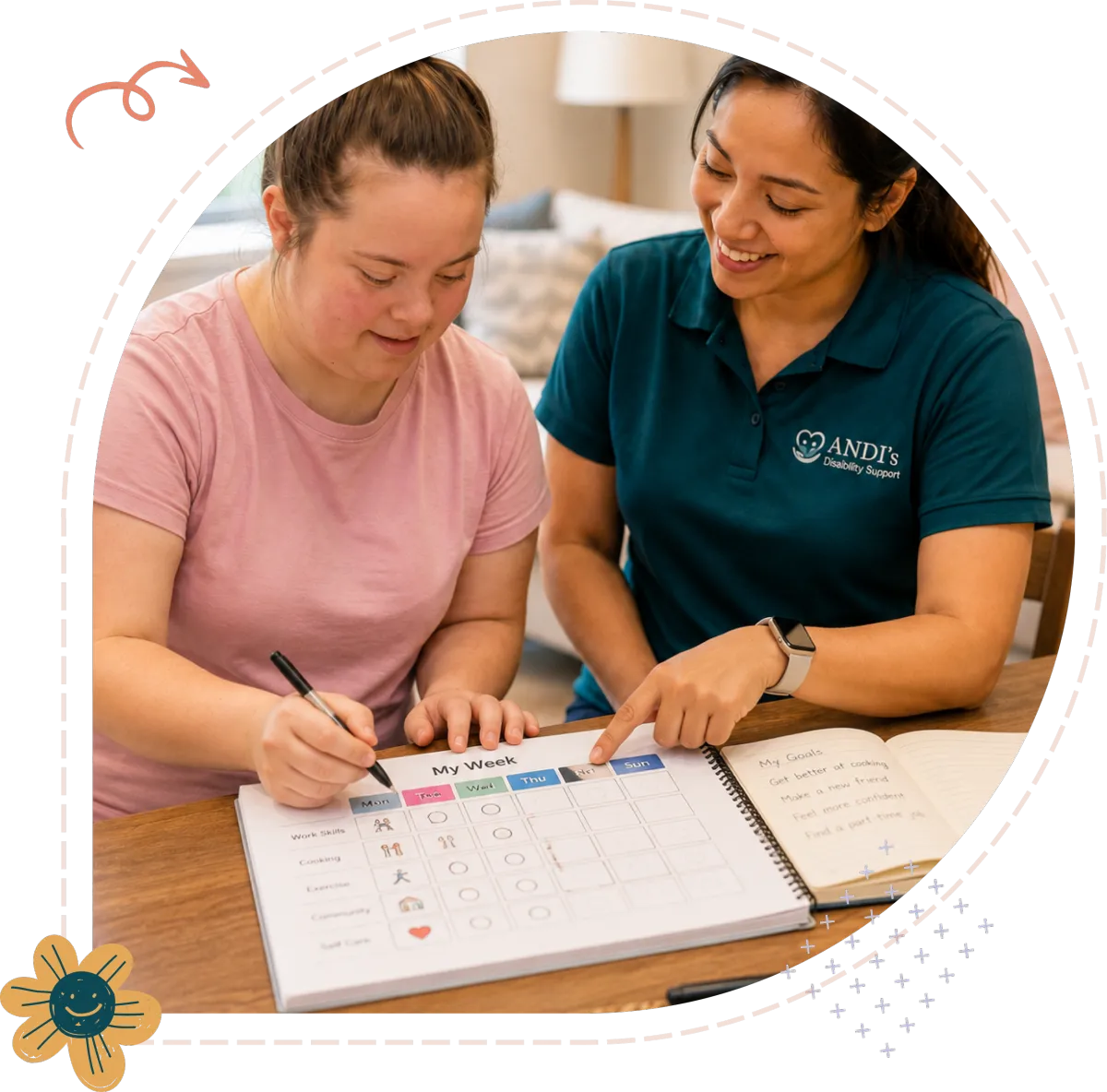
Tell us about your concerns, goals and what you're hoping to achieve.
We take the time to understand your situation and recommend the services that best support your individual.
Together, we develop a coordinated plan tailored to your strengths, goals and circumstances.
As your needs evolve, your support evolves too. Our team continues working alongside you to promote meaningful progress and long-term success.
Occupational therapy reaches people through more funding pathways than any of our other services, because it spans childhood, disability and aged care.
There are also costs beyond the sessions themselves. Equipment, home modifications and the reports that support a funding application are quoted separately, and we will tell you about them before they happen rather than afterwards.
No referral and no eligibility decision to wait on. The fee is quoted in writing before the first appointment.
Occupational therapy is funded in most plans, along with the assessments and reports that plan reviews ask for. Self, plan and agency managed.
Rebates for eligible services with a GP referral and care plan. A rebate covers part of the fee rather than all of it.
For older adults, occupational therapy and home safety work can often be drawn from a package. Private health extras may also apply.
Our team is happy to talk it through before you book anything.
Roughly, a physiotherapist is most interested in how the body moves, and an occupational therapist is most interested in what you are trying to do with it. There is real overlap, particularly with children's motor skills.
If what you are describing is pain, injury or a specific movement problem, physiotherapy is often the better starting point. If it is a task that has become hard, or a day that keeps falling apart, that is occupational therapy. We will say so if you have come to the wrong one.
Almost never. Handwriting is the visible symptom, and underneath it there is usually something else: core strength and posture, fine motor control, attention, or the sheer effort of getting ideas into words.
We assess what is actually driving it, then work on that. Sometimes the honest answer is that handwriting is not the battle worth fighting and the child should be typing, and we will help make that case to the school.
We assess how a person responds to sensory input and what that means for their day, and we use that to change routines, environments and expectations.
We are careful about the claims here. The evidence supports adapting the environment and the task to how someone processes sensory information. It is much weaker for sensory activities as a treatment that improves unrelated skills, so we will not sell you a program on that basis.
Yes, and this is a large part of adult and older adult occupational therapy. We assess what is needed, trial options where we can rather than guessing, and write the report that a funder or a builder will ask for.
We do not sell equipment and we do not take commissions from suppliers, so a recommendation is a recommendation and nothing else.
Less time than people expect, in many cases. A great deal of OT is short: assess, change a few things, teach the strategy, review, finish.
Longer involvement makes sense where a child is developing and goals keep moving, or where a person's needs change over time. What we will not do is keep booking sessions out of habit. Every block ends with a review that can end the work.
Whether you're seeking support for yourself, your child or a loved one, we're here to listen, understand and help you move forward with confidence.
From assessment and therapy to counselling, disability support and home care, our team is committed to providing personalised care that empowers individuals and strengthens families.

We care deeply about the people we support, and it shows in how we work.

Qualified clinicians who supervise each other and keep learning.

Support that stays with you as your needs change, not just at the start.




We honour the diverse communities such as the LGBTQ of which we are a part and we celebrate the extraordinary diversity of people that each represent.

We acknowledge the traditional owners of the lands. We pay respect to Elders, past and present and acknowledge the ongoing connection that Aboriginal people have to this land and recognise Aboriginal people as the original custodians of this land.

Aboriginal peoples of the Kulin Nations are the Traditional Custodians of the lands now named City of Greater Dandenong. Those who live, work and contribute to the municipality walk in the footsteps of the Bunurong/Boon Wurrung and Wurundjeri Woi-wurrung Peoples, and are enriched by Australia’s First Peoples experiences, cultures, histories and knowledge.
© 2026 ANDI Support. All rights reserved.