Step 1
Start the Conversation
Tell us about your concerns, goals and what you're hoping to achieve.

You do not need a referral to work with us. Families refer themselves every day. Where a referral does matter is funding, and where it helps is telling us what question you want answered.
Referring for the first time and not sure what we need? The form below asks for it, and anything you cannot answer can be left blank.
Plenty of people wait months for a referral they never needed. You can contact us directly, describe what is going on, and get started without one.
A referral matters in two situations. The first is funding: a GP referral and care plan are what make Medicare rebates possible for eligible services, and some funding pathways ask for one before they will pay. The second is information: a good referral from someone who knows the person tells us things that take us weeks to work out on our own.
What we ask of every referrer, professional or family, is the same thing. Tell us what you want the work to answer. "Concerns re speech" gives us almost nothing. "Two years old, family understand him and childcare do not, mum wants to know whether to wait" shapes the whole first appointment.
And a referral is not a booking. We come back to you with availability and a realistic wait, and we will tell you honestly if we are not the right service, ideally before the family has waited on us for a month.

They all arrive at the same place. The difference is what each one usually includes and what we will ask you for.

You know the person best. Tell us what you have noticed and what you have already tried.

Adults and teenagers can contact us directly. Nobody else needs to be involved for you to start.

The pathway that matters for Medicare rebates on eligible services. Send the referral and care plan together.
Tell us the clinical question. If there is a report or assessment already, send it and we will not repeat it.
What the classroom is seeing is information a clinic room cannot give us. Please get the family's consent first.
Send the plan goals and the budget the support would come from, along with the plan end date.
Tell us the goals, the funding and the deadline. We will come back with availability and a start date.
For older Australians on a Home Care Package or working through My Aged Care, including after a hospital stay.
Five things, and only two of them are administrative. If you cannot answer one of them, send it anyway and we will ask.
The most useful referrals are short and specific. A page of history with no question at the end is harder to act on than three sentences that say what changed, what has been tried and what the family is hoping for.
Attachments help when they are relevant: a previous assessment, a school report, a discharge summary, an NDIS plan. Please send those securely once we are in touch rather than through the form on this page.
Who the person is, and how to contact them or the parent or carer who speaks for them.
What is going on, in plain words. What changed, when, and what it looks like at home, at school or at work.
What you want the work to answer. The single most useful line in any referral, and the one most often left out.
What has already been tried, including previous assessments and other providers, so we do not repeat work that has been done.
How it would be funded, if you know. Private, NDIS, Medicare, private health or a Home Care Package.
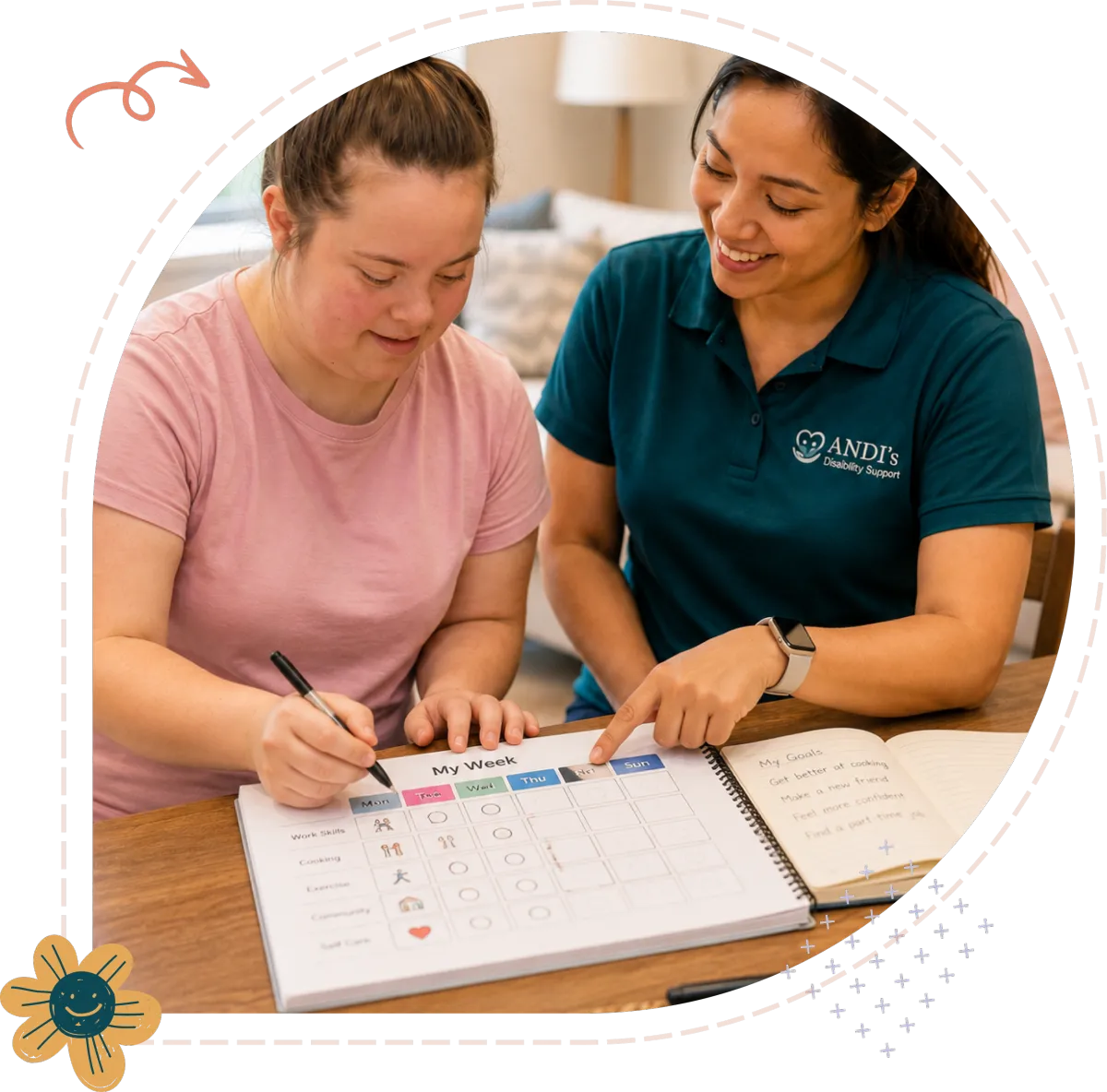
Tell us about your concerns, goals and what you're hoping to achieve.
We take the time to understand your situation and recommend the services that best support your individual.
Together, we develop a coordinated plan tailored to your strengths, goals and circumstances.
As your needs evolve, your support evolves too. Our team continues working alongside you to promote meaningful progress and long-term success.
What we do with a referral is the same either way. What we ask of you differs a little.
No referral letter, no diagnosis and no plan is needed. You are not jumping a queue by doing this yourself, and you are not at a disadvantage for not having a professional behind you.
Describe what is happening rather than trying to name a service.
Tell us if you have a preference about who you see, or about times of day.
If you want Medicare rebates on an eligible service, we will tell you what to ask your GP for.

For GPs, paediatricians, psychiatrists, schools, early learning services, support coordinators, aged care providers and other allied health practitioners.
Please confirm the person or their guardian knows about the referral and has agreed to it.
Name the question you want answered, and the deadline if there is one.
We acknowledge every referral and tell you if we are not the right service.
Our team is happy to talk it through before you book anything.
Not to book. You can refer yourself and pay privately, or use an NDIS plan or a Home Care Package, without a GP being involved. A GP referral and care plan are what make Medicare rebates possible for eligible services, so it is worth asking us first whether that applies to what you want, and we will tell you exactly what to ask your GP for.
It depends on the service, the clinician and where you are, so we will not quote a number here that turns out to be wrong for you. What we will do is tell you the real wait when we come back to you, rather than an encouraging one. If it is long, say so and we will tell you what else is available, including services that are not us.
No. The person, or their parent or guardian where they are a child, needs to know about the referral and agree to it. We contact them directly to arrange intake, so a referral they were not expecting starts the relationship badly. If you are worried about how to raise it with them, ring us and we will talk it through.
Leave the service blank and describe what is going on instead. Working out which discipline fits is our job, and because assessment, therapy, counselling and support all sit inside one organisation, getting it slightly wrong at referral costs nothing. We will point you to the right team, including when that team is somewhere else.
Please do, but not through the form on this page, which is not a secure channel for clinical documents. Tell us in the referral what you have, and we will arrange a secure way to send it once we are in touch. Existing reports often mean we can skip work rather than repeat it.
Whether you're seeking support for yourself, your child or a loved one, we're here to listen, understand and help you move forward with confidence.
From assessment and therapy to counselling, disability support and home care, our team is committed to providing personalised care that empowers individuals and strengthens families.
We care deeply about the people we support, and it shows in how we work.

Qualified clinicians who supervise each other and keep learning.

Support that stays with you as your needs change, not just at the start.




We honour the diverse communities such as the LGBTQ of which we are a part and we celebrate the extraordinary diversity of people that each represent.

We acknowledge the traditional owners of the lands. We pay respect to Elders, past and present and acknowledge the ongoing connection that Aboriginal people have to this land and recognise Aboriginal people as the original custodians of this land.

Aboriginal peoples of the Kulin Nations are the Traditional Custodians of the lands now named City of Greater Dandenong. Those who live, work and contribute to the municipality walk in the footsteps of the Bunurong/Boon Wurrung and Wurundjeri Woi-wurrung Peoples, and are enriched by Australia’s First Peoples experiences, cultures, histories and knowledge.
© 2026 ANDI Support. All rights reserved.