Step 1
Start the Conversation
Tell us about your concerns, goals and what you're hoping to achieve.

Almost everybody wants the same thing: their own house, their own kitchen, their own Saturday. Home care is the practical arrangement that keeps that going — a bit of help with the parts that have become hard, and no interference with the parts that have not.
You do not need a government package to begin. Plenty of families start with a small amount of private help while an assessment is being arranged, and we can talk you through that process either way.

Home care gets written about as though it were the beginning of the end. For most people it is the opposite: the thing that lets an ordinary life carry on for years longer than it otherwise would.
The work is deliberately unremarkable. Someone helps with the shower so the morning is not exhausting. Someone drives to the appointment so the day is not spent on two buses. Someone does the vacuuming that has quietly become impossible, and stays for a cup of tea, which is often the part that matters most.
What we try hard not to do is take over. Help that arrives and does everything is the fastest way to lose the abilities somebody still has. So the standing instruction is to assist with what is hard and leave alone what is not, even when doing it ourselves would be quicker.
Because ANDI is an allied health organisation as well as a support provider, the practical help can sit alongside clinical input where that is useful: an occupational therapist looking at the bathroom, a speech pathologist when swallowing changes, a counsellor when grief or isolation is the real problem. That is coordinated here rather than being another set of phone calls for the family.
Six areas. Most people start with one and add another later, and the useful package is usually smaller than families expect at the outset.

The support people find hardest to accept and are usually most relieved by. Done with privacy, and at your pace.
Often includes
Showering, dressing and grooming
Getting up in the morning and settled at night
Continence support and personal hygiene
Prompts and reminders for medication routines
The jobs that stop being manageable one at a time, and that decide whether a house stays comfortable to live in.
Often includes
Cleaning, laundry and changing the bed
Meal preparation, and eating properly rather than on toast
Shopping, with you or for you
The small maintenance jobs that are no longer safe on a ladder
Isolation does more damage than most single health problems. Transport is usually the thing standing between someone and their own life.
Often includes
Getting to medical appointments, and being there for them
Shops, the bank, the post office and the chemist
Church, clubs, bowls, the library and the local cafe
Visiting family, and getting to funerals and events that matter
Not an add-on. For a lot of people living alone, a regular visitor is the single most valuable hour of the week.
Often includes
A regular visit from someone you know and like
Doing something rather than only being visited
Help staying in touch with family, including on a screen
Getting back to groups and activities after a break
Family carers hold most of this system together and are routinely the last people offered anything. Respite is a service in its own right.
Often includes
Regular hours so a carer can work, rest or leave the house
Cover for a holiday, a procedure or an emergency
Extra support after a hospital discharge
Someone to talk to about how the caring is going
The part most home care providers cannot offer. Where clinical input would help, it can come to the house instead of the other way round.
Often includes
Occupational therapy: home safety, equipment and getting around
Speech pathology: communication, and swallowing at mealtimes
Counselling: grief, isolation and adjusting to change
Assessment when something has changed and nobody is sure why

Speech, play, motor skills and the routines that make kinder and childcare easier.

Communication, learning, sensory processing and the practical skills school asks for.

Counselling, emotional support, and the transitions that come thick and fast.

Life skills, confidence, and preparing for work, study or moving out.

Assessment, therapy, counselling and disability support, built around goals you set.

Home care, therapy and practical help, so staying put stays realistic.
Two things matter more than anything else in this service, and neither of them is impressive on a brochure: who comes, and whether they come when they said.

Letting somebody into your home and your bathroom asks a lot of trust. A different stranger each week makes that impossible, which is why consistency is the thing we protect hardest.
Regular workers, introduced before they start, with a small backup team you have also met for leave and illness.
You can ask for someone else at any time, without explaining why. Personal care is personal, and preferences are legitimate.
Times that suit your day, not the roster. A shower visit at eleven is not a morning routine.
We tell you when something changes, including when we are running late. Waiting by the window is a real cost.

Needs at home rarely stay level. The point of reviewing regularly is to add help early, take it away when it is no longer needed, and notice the changes that mean something medical is going on.
Start small and adjust, rather than buying a large package on a guess in the first week.
Workers who notice and report, with consent — appetite, balance, confusion, a bruise, a mood. That is often the earliest warning available.
Allied health brought in when it is needed, rather than another referral and another wait.
An honest conversation about risk. If we think home is becoming unsafe we will say so, early and to your face, and help you weigh up the options.
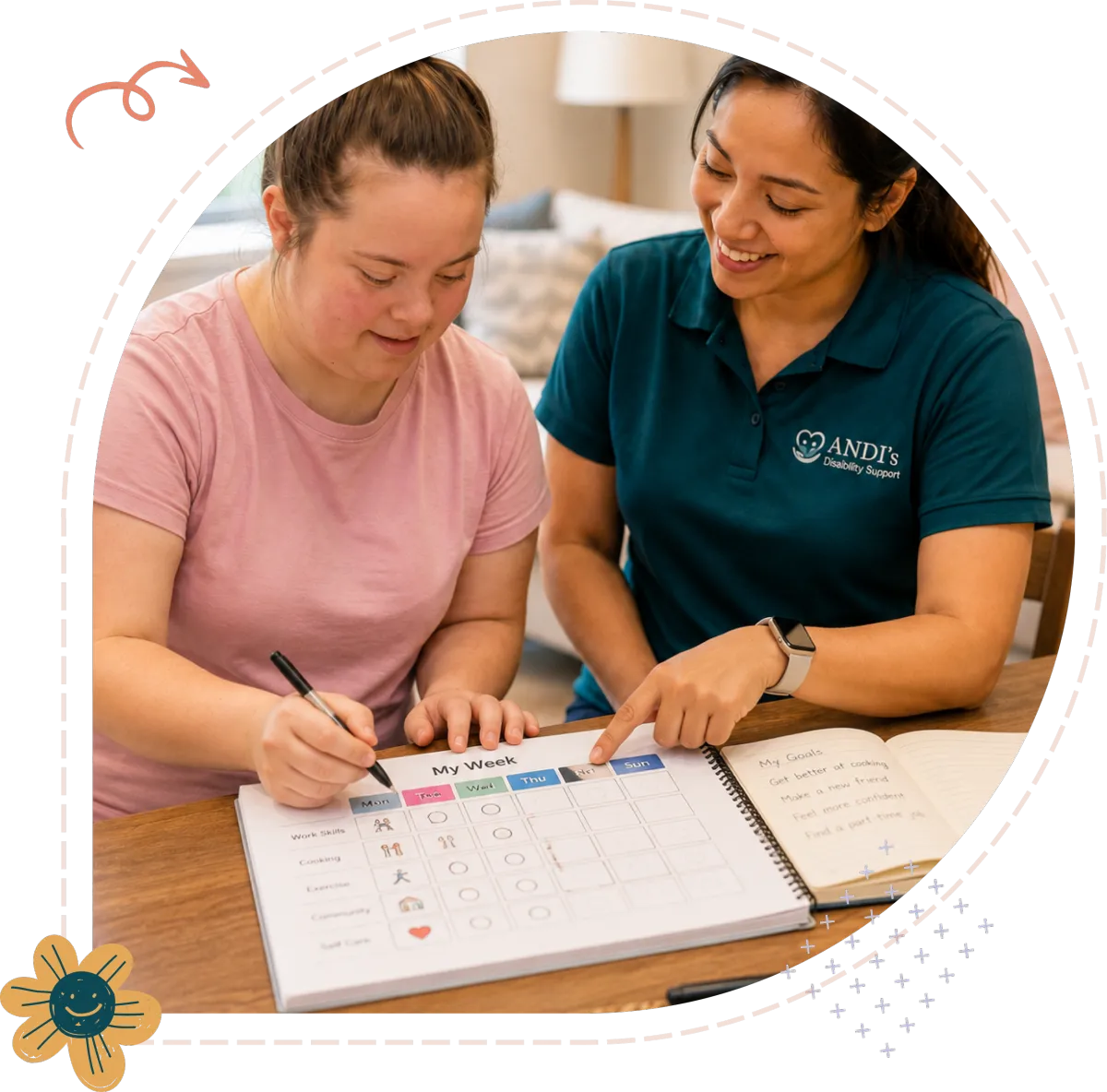
Tell us about your concerns, goals and what you're hoping to achieve.
We take the time to understand your situation and recommend the services that best support your individual.
Together, we develop a coordinated plan tailored to your strengths, goals and circumstances.
As your needs evolve, your support evolves too. Our team continues working alongside you to promote meaningful progress and long-term success.
There are two broad routes: government-funded aged care, which begins with an assessment arranged through My Aged Care, and paying privately, which begins whenever you like. Adults under 65 usually go through the disability system instead.
The government funding rules in aged care have been changing, and we would rather explain your situation properly than print a summary here that dates. What we will always do is give you the hourly cost of what you are asking for, in writing, before anything is booked.
No assessment, no waiting list and no eligibility test. The most common way to start, and easy to keep alongside funded support later.
Where support at home relates to a disability rather than ageing, it usually sits in an NDIS plan instead of the aged care system.
Begins with a free assessment arranged through My Aged Care, which determines what level of support you are eligible for. Waits vary.
Rebates apply to eligible allied health appointments with a GP referral and care plan. They do not cover support work, cleaning or transport.
A house is not a ward. Four commitments about how support is delivered, which matter as much as what is delivered.
Your kitchen, your order of doing things, your radio station. We fit around a household rather than importing a system into it.
Whatever someone can still do, they keep doing. Losing an ability because help arrived is a worse outcome than a slower shower.

Rails and equipment where they earn their place. We will not fill a home with gear nobody wanted or asked for.
Where someone can make their own decisions, they make them — including decisions their family disagrees with. Our job is to make sure they are informed ones.
Our team is happy to talk it through before you book anything.
No. Many families start privately, often with a couple of hours a week, and arrange the government assessment in parallel. Support does not have to wait for paperwork.
It is still worth starting the assessment early, because both the assessment and any wait afterwards take time, and having it done costs you nothing if you never use it.
Usually less than families fear at the start. A common first arrangement is one or two visits a week aimed at the specific things that have become hard — the shower, the shopping, the drive to the doctor
.
Starting small also tells you something a big package cannot: what genuinely helps. It is easy to add hours once you know, and much harder to unwind an arrangement that took over more than anybody intended.
That is the most common obstacle in home care, and it is a reasonable position rather than stubbornness. Accepting help can feel like the first step towards losing your independence, when in fact it is usually what protects it.
What tends to work is starting with something that is clearly a chore rather than personal care — the cleaning, the shopping, a lift somewhere — with the same person each time. Personal care becomes far easier to accept once there is a relationship. What we will not do is push a service on somebody who is competent to refuse it.
Days and times, yes, within what is realistic — early mornings are the busiest hour in home care everywhere, so the earliest slots go first. We will tell you honestly what we can commit to rather than promising a time we then cannot staff.
The worker matters even more, and you should expect to meet them first, ask for a preference on things like gender or language, and change your mind later without any awkwardness about it.
Support scales up. More hours, different tasks, allied health for a specific problem, respite if a family carer is at their limit. Most changes are handled with a phone call and a review rather than starting again.
There is also a point at which home stops being the safest place, and we would rather raise that early and honestly than let a family arrive there through a crisis. We do not provide residential care, so we have nothing to gain from that conversation except your trust.
Whether you're seeking support for yourself, your child or a loved one, we're here to listen, understand and help you move forward with confidence.
From assessment and therapy to counselling, disability support and home care, our team is committed to providing personalised care that empowers individuals and strengthens families.
We care deeply about the people we support, and it shows in how we work.

Qualified clinicians who supervise each other and keep learning.

Support that stays with you as your needs change, not just at the start.




We honour the diverse communities such as the LGBTQ of which we are a part and we celebrate the extraordinary diversity of people that each represent.

We acknowledge the traditional owners of the lands. We pay respect to Elders, past and present and acknowledge the ongoing connection that Aboriginal people have to this land and recognise Aboriginal people as the original custodians of this land.

Aboriginal peoples of the Kulin Nations are the Traditional Custodians of the lands now named City of Greater Dandenong. Those who live, work and contribute to the municipality walk in the footsteps of the Bunurong/Boon Wurrung and Wurundjeri Woi-wurrung Peoples, and are enriched by Australia’s First Peoples experiences, cultures, histories and knowledge.
© 2026 ANDI Support. All rights reserved.